
Better screening starts with understanding the key challenges
Better screening starts with understanding the key challenges
Higher-quality pulp, reliable production, lower energy usage and longer equipment life: screening needs to deliver on several fronts at once. The challenge is not simply to improve one result, but to find the right balance for the mill’s furnish, process and quality requirements.
Pressure screening has a straightforward purpose: separate unwanted material from usable fiber. Inside the screen, pulp passes through the holes or slots of a screen cylinder, while a rotor helps keep those perforations clear. Yet the performance of this seemingly simple process depends on several closely connected factors—from cylinder geometry and rotor operation to consistency and reject flow.
That is why improving screening starts with understanding the whole system, rather than adjusting one setting in isolation.
1. Removing contaminants without losing valuable fiber
The first challenge is achieving the required pulp cleanliness while retaining as much usable fiber as possible. Recycled furnish makes this particularly demanding, bringing a varied mix of plastics, adhesive contaminants, fiber bundles, flakes and other unwanted materials.
Screening is not determined by perforation size alone. Contaminant shape and flexibility, fiber characteristics and the flow through the screen all influence what passes into the accept stream. Deformable contaminants, such as some stickies, can pass through slots under unfavorable screening conditions. At the same time, usable fibers can leave with the rejects.
Smaller perforations may improve contaminant removal, but they can also restrict fiber passage and capacity. Screening also has limits: very small or colloidal contaminants can pass through fine screens and require other control measures.
The practical question is therefore not “How efficiently can we screen?” but “What efficient screening does this furnish need, and how can we achieve it with acceptable fiber losses?
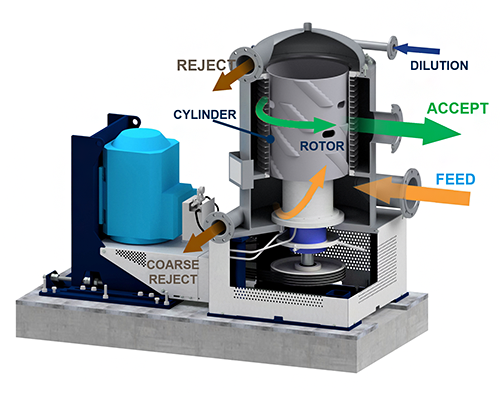
Figure 1: AFT MacroFlow pressure screen, used for various screening applications.
2. Increasing capacity without compromising quality
When a screen becomes a production bottleneck, increasing rotor speed or using a cylinder with more open area can seem like the obvious response. These changes may increase throughput, but they can also affect pulp cleanliness, power consumption and wear.
Hydraulic loading is particularly important. Excessive flow through the holes or slots can increase contaminant passage, undermining the quality improvement that screening is intended to deliver.
Before changing equipment or operating settings, it helps to establish what is actually limiting capacity. Is the cylinder suited to the current furnish? Are perforations becoming plugged? Has feed consistency changed? Are reject flows appropriate?
The aim should be sustainable capacity at the required quality—not simply the highest flow the screen can pass.
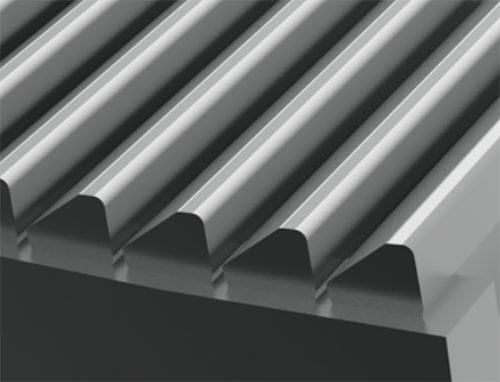
Figure 2: Choosing correct perforations and profile is key to optimizing any screening application.
3. Reducing energy while maintaining stable operation
Rotor design and tip speed strongly influence screening power consumption. However, the rotor also performs an essential task: keeping the cylinder perforations clear so that screening can continue.
Reducing speed without considering the rotor–cylinder combination and operating conditions may result in insufficient runnability. Running faster than necessary, on the other hand, can consume energy without delivering a worthwhile process benefit.
This makes energy optimization a matching exercise. Rotor selection, cylinder design, consistency and operating speed need to work together. This combined approach provides a route to reducing power consumption per produced ton.
A useful way to assess an improvement is to consider energy per ton of accepted pulp alongside cleanliness, throughput and operating stability. Lower power alone is not enough if production or quality suffers.
4. Managing variability, thickening and plugging
A screening system does not always receive the same feed. Changes in furnish composition, fiber properties and consistency can move it away from its preferred operating window.
Within the screen, reject thickening adds another challenge. As material passes into the accept stream, the remaining suspension can become more concentrated. If screening phenomenon and appropriate dilution are not ideal, fiber accumulation and plugging can limit operation.
These problems are better understood through operating trends than isolated readings. Comparing feed and reject consistency, flows, differential pressure and power can help reveal whether a problem reflects changing process conditions or a developing equipment issue.
The objective is an operating range that remains reliable through normal furnish variation—not a setting that works only under ideal conditions.
5. Controlling wear before it affects performance
Wear is more than a maintenance concern. Screen performance depends on precisely engineered perforations and surface profiles, so changes in component condition can also change separation behavior.
Abrasive contaminants such as sand, glass and metal are particularly challenging in recycled-fiber applications. Wear-resistant alloy choices in equipment material selection, suitable surface treatments, such as AFT’s novel DiamondWire treatment, as well as process optimization can help reduce their impact – and extend lifetime.
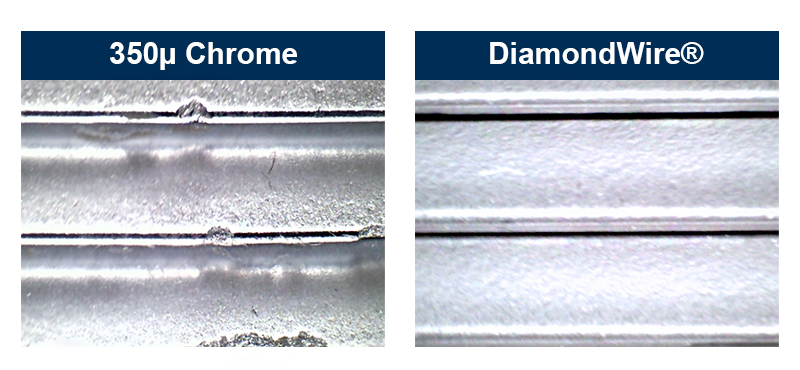
Figure x: AFT’s proprietary wear-resistant DiamondWire surface treatment brings a novel alternative to chroming.
Regular inspection should therefore consider more than whether a cylinder or rotor can remain in service. Slot accuracy, profile condition, structural integrity and component fit all matter. Tracking these changes supports maintenance decisions before deterioration becomes a production problem.
How AFT helps mills address screening challenges
At AFT, the starting point is the mill’s challenge—not a product selection.
Process and mechanical audits bring operating data together with equipment-condition assessments. This helps distinguish between issues that may be addressed through operating adjustments, maintenance, component changes or broader system improvements.
Process simulations and application expertise can then support a practical improvement plan. Depending on the findings, this may involve optimizing the existing installation, matching the rotor and cylinder more closely to the application, improving reject handling or addressing wear. Building seamless collaboration with our customers benefits both us and the customer.
The priority is to agree on what success means for the mill and evaluate changes against that baseline. Better screening is not about maximizing one parameter. It is about finding—and maintaining—the balance that delivers cleaner pulp, efficient fiber use and dependable production.

About the Author

Kimmo Nurminen, Product Director – Separation Technology (Screening), AFT
I joined Aikawa Fiber Technologies in 2016 and currently serve as Product Director – managing and developing screening technologies. In this role, I have global responsibility for AFT’s screening technology portfolio, covering both product management and R&D from concept and development through to production and customer application.
With ~30 years of experience in the P&P industry, I have worked extensively for several companies in different parts of the world, gaining a broad perspective on both technology development and the needs of pulp and paper producers. My Master’s Thesis already in the beginning of my career focused on headbox screening, which provided an early foundation for my expertise in screening technologies.
Working across different markets and regions has given me a wide understanding of the challenges faced by both our customers and our own organization. While many of these challenges are shared globally, finding the right solution often requires an understanding of regional requirements, operating conditions and customer-specific needs. I am passionate about developing screening solutions that address these challenges and create measurable value for our customers.